
Be yourself; Everyone else is already taken.
— Oscar Wilde.
This is the first post on my new blog. I’m just getting this new blog going, so stay tuned for more. Subscribe below to get notified when I post new updates.
Be yourself; Everyone else is already taken.
— Oscar Wilde.
This is the first post on my new blog. I’m just getting this new blog going, so stay tuned for more. Subscribe below to get notified when I post new updates.
What good is a great laptop if you’ll have to spend hours on the phone troubleshooting every time you have a problem with it? Having access to quality tech support is just as important as the actual specs inside your notebook, though it’s not always easy to tell which PC makers deliver fast, efficient customer service.

That’s why, for more than a decade, we’ve gone undercover as everyday shoppers to test the phone, social media and web support that’s provided by the leading laptop manufacturers. Here are tech support’s biggest winners and losers for 2019.
Apple has dominated the top spot in our rankings for the past few years, and that hasn’t changed for 2019. The Cupertino company’s tech support agents continue to be among the fastest and most knowledgeable in the business, delivering accurate answers to our Mac questions across live chat, social media and over the phone.
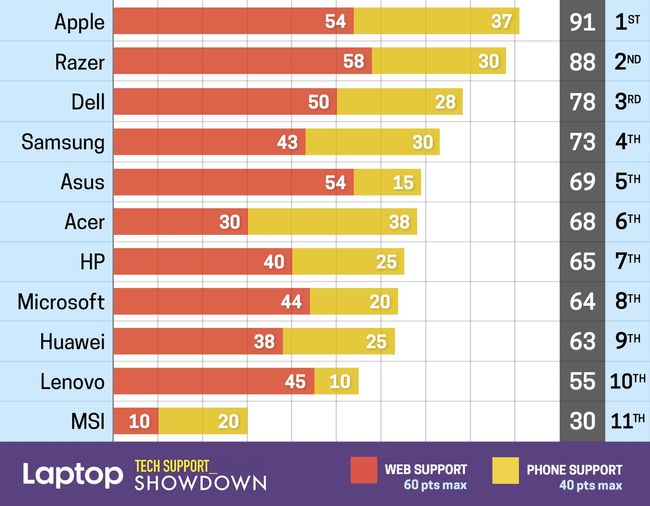
The other big story this year was the rise of Razer. The gaming laptop brand climbed from second to last in 2018 to second place in 2019, going from offering zero phone support last year to presenting us with knowledgeable, thorough agents this year. And despite slipping a bit on the phone front, Dell retained its usual top three ranking with a third-place finish.
MSI maintained its dead-last spot, due to its frustrating (though slightly improved) web experience and nonresponsive social accounts. Lenovo dropped to second to last by failing to correctly answer any of our phone questions. Huawei debuted on our list this year because of its string of excellent laptop releases, though its tech support was just a bit too lacking to keep it out of the bottom three.
The SSDs inside the Surface Laptop 3 and Surface Pro X aren’t so serviceable, after all. We already knew that manually upgrading your SSD could void the warranty of your new Surface device. Now a report from PCWorld reveals that Microsoft Store employees won’t do it either. At least, not yet.
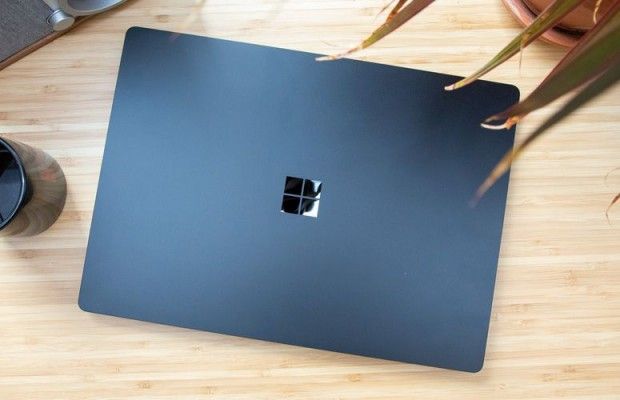
Microsoft Store service agents told the tech site that the SSDs inside the Surface Laptop 3 and Surface Pro X are replaceable, but not upgradable. Any practical difference between replacing and upgrading a drive is lost on us. Regardless, this means you can’t buy a base model Surface Laptop 3 and avoid Microsoft’s crazy-expensive storage upgrades by swapping in your own drive because doing so puts you at risk of voiding warranty should anything go awry. As Microsoft’s product page eerily states, “Hard drive is not user removable. Hard drive is only removable by skilled technician following Microsoft provided instructions.”
That’s a shame because, as we noted in our Surface Laptop 3 review, Microsoft charges a fortune (at least $300) to upgrade storage capacity. Not only that, but the SSDs Microsoft uses are sluggish when compared to those in other premium laptops.
When Microsoft unveiled the Surface Laptop 3 at its event earlier this month, it showed a brief video demonstrating how easy it is to replace the SSD. Everyone was thrilled until Microsoft muddled what appeared to be a dig at Apple by urging people not to service the Surface Laptop 3 seconds after touting how serviceable it is.
We hope Microsoft changes its stance and either allows users to upgrade their own SSD without voiding warranty or giving its employees permission to do so. On the other hand, we wouldn’t be having this discussion if Microsoft didn’t tout a feature it won’t actually let people use, or if the company didn’t charge an arm and a leg to upgrade the capacity of the Surface Laptop 3’s slow SSD.
Phillip Tracy is a senior writer at Tom’s Guide and Laptop Mag, where he reviews laptops and covers the latest industry news. After graduating with a journalism degree from the University of Texas at Austin, Phillip became a tech reporter at the Daily Dot. There, he wrote reviews for a range of gadgets and covered everything from social media trends to cybersecurity. Prior to that, he wrote for RCR Wireless News and NewBay Media. When he’s not tinkering with devices, you can find Phillip playing video games, reading, listening to indie music or watching soccer.
Up until around 2010, both consumers and businesses could be counted on to upgrade their laptops every three years on average, because technology changed so quickly that anything older than that felt like a dinosaur. Since then, however, that upgrade cycle has gotten longer and longer, and many users now have notebooks that are old enough to enter grade school.
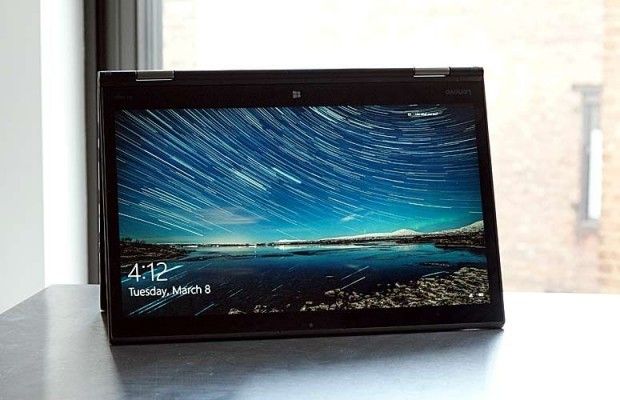
You can blame the economy or competing devices such as tablets, but in recent years, many consumers just haven’t noticed a big enough difference between their five-year-old laptop and the shiny new ones on the shelf at Best Buy. Who wants to spend $700 to get something that’s just a little bit faster than what they have now?
However, in 2017, if you replace a laptop that’s at least three years old, you will see huge benefits that go way beyond minor performance gains. From sharper, more colorful screens to longer battery life, USB Type-C / Thunderbolt 3 ports and 7th Gen CPUs, here are the key features you can get on a new notebook that your old system just can’t match.
Everyone loves USB, the ubiquitous connector that charges your phone and tablet, writes data to your flash drive and even connects you to helpful docking stations. Your old laptop probably has a few standard USB Type-A ports, but many 2017 systems come with USB Type-C ports which offer a whole new world of functionality. USB Type-C ports can carry data and electricity over a single wire, allowing you to power your laptop, output video to external monitors and copy files with just one standard cable. Better still, all USB Type-C cables are reversible, which means that you never have to worry about plugging them in upside down.
This is an example post, originally published as part of Blogging University. Enroll in one of our ten programs, and start your blog right.
You’re going to publish a post today. Don’t worry about how your blog looks. Don’t worry if you haven’t given it a name yet, or you’re feeling overwhelmed. Just click the “New Post” button, and tell us why you’re here.
Why do this?
The post can be short or long, a personal intro to your life or a bloggy mission statement, a manifesto for the future or a simple outline of your the types of things you hope to publish.
To help you get started, here are a few questions:
You’re not locked into any of this; one of the wonderful things about blogs is how they constantly evolve as we learn, grow, and interact with one another — but it’s good to know where and why you started, and articulating your goals may just give you a few other post ideas.
Can’t think how to get started? Just write the first thing that pops into your head. Anne Lamott, author of a book on writing we love, says that you need to give yourself permission to write a “crappy first draft”. Anne makes a great point — just start writing, and worry about editing it later.
When you’re ready to publish, give your post three to five tags that describe your blog’s focus — writing, photography, fiction, parenting, food, cars, movies, sports, whatever. These tags will help others who care about your topics find you in the Reader. Make sure one of the tags is “zerotohero,” so other new bloggers can find you, too.

 Technology Blog